
Blog

News, Stories, Tips & Culture

How We Hit 83.4% on SWE-bench Verified (Part 1): Getting Reproduction Right
Featured

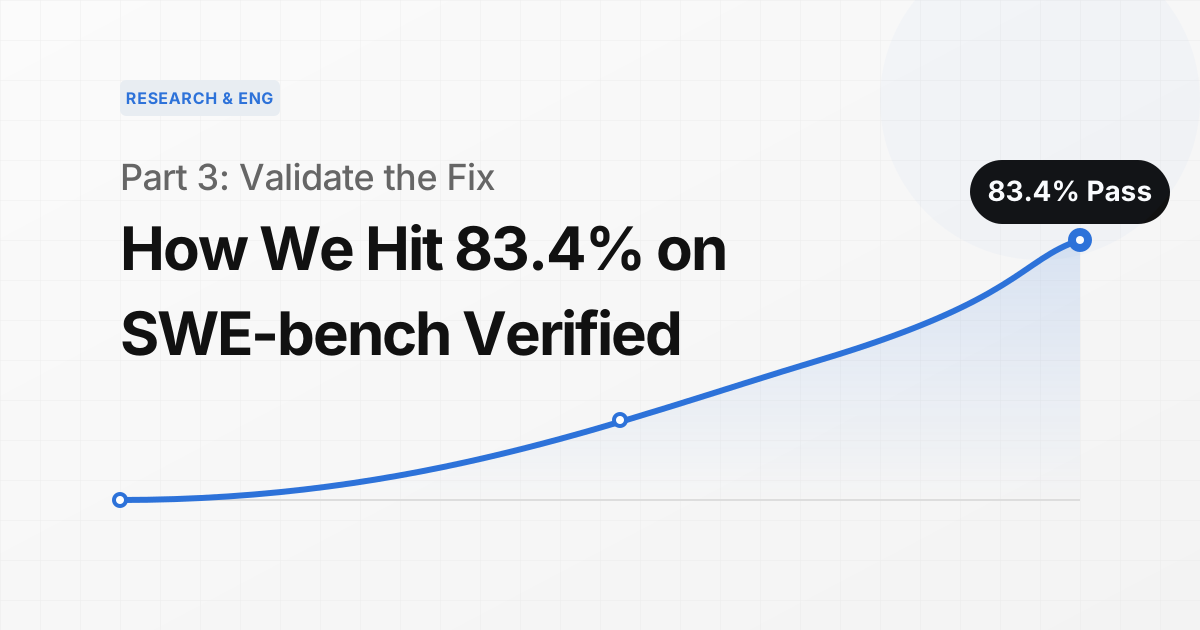
How We Hit 83.4% on SWE-bench Verified (Part 1): Getting Reproduction Right

The first part of our technical deep dive into achieving an 83.4% pass rate on SWE-bench Verified using runtime facts. This post covers Stage 1: How do you make sure a bug reproduction is actually correct before you touch any code?

Syncause
6 mins read
Achieving an 83.4% Fix Rate on SWE-bench Verified with Runtime Facts
8 mins read

Achieving an 83.4% Fix Rate on SWE-bench Verified with Runtime Facts

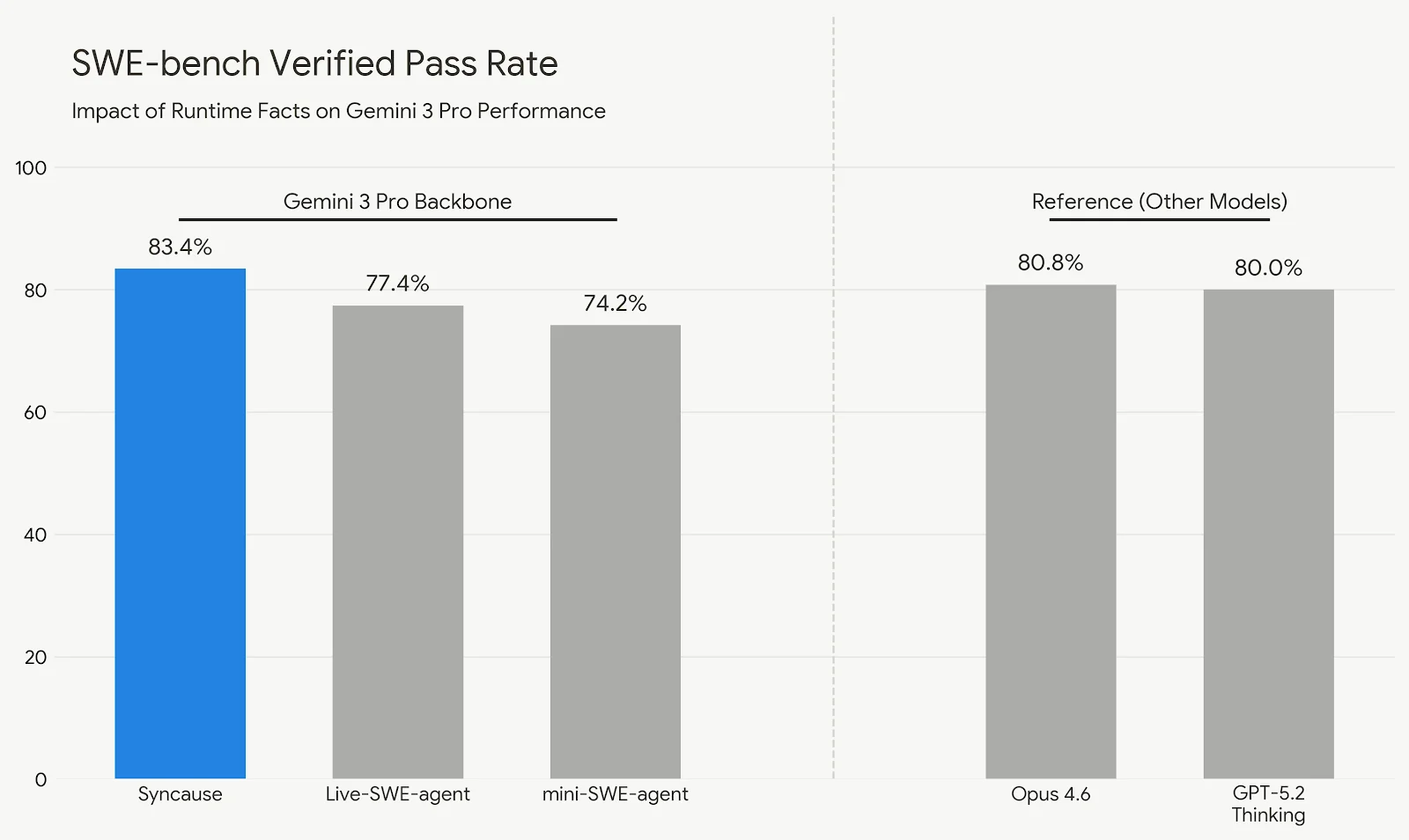
In our latest SWE-bench Verified tests, we validated a new AI debugging paradigm: systematic debugging based on Runtime Facts. By introducing a dynamic tracing mechanism into the Live-SWE-agent architecture to provide the model with runtime context, we achieved a theoretical combined fix rate of 83.4% using the Google Gemini 3 Pro model, marking the highest known performance on the SWE-bench Verified evaluation to date.

Syncause
2026 Leading Debug Agent Skill In-Depth Comparison: The Ultimate AI Debugging Skills Selection Guide
10 mins read

2026 Leading Debug Agent Skill In-Depth Comparison: The Ultimate AI Debugging Skills Selection Guide

In-depth comparison of 5 leading Debug Agent Skill products: Systematic-debugging, Debug (Inbox Zero), Debugging-strategies, Debug-mode, and Syncause Agent Skill.

Syncause
Debug Agent Skills Guide: From "Guessing Code" to Runtime Reality
8 mins read

Debug Agent Skills Guide: From "Guessing Code" to Runtime Reality

Syncause
Introducing Debug Skill: Stop AI from Patching Symptoms and Pinpoint Root Causes
8 mins read

Introducing Debug Skill: Stop AI from Patching Symptoms and Pinpoint Root Causes

Syncause
Industry Survey: Faster Coding, Slower Debugging
8 mins read

Industry Survey: Faster Coding, Slower Debugging

While AI tools promise to boost productivity, the data reveals a counterintuitive truth: coding speed has increased, but debug time has surged.

Syncause
How to Help AI Debug Your Code Better
10 mins read

How to Help AI Debug Your Code Better

Coding agents are getting better at writing code. But when it comes to debugging real-world bugs, most AI still struggles — not because the models are weak, but because they lack runtime context.

Syncause
Why Coding Agents Fail After Multiple Debugging Attempts
10 mins read

Why Coding Agents Fail After Multiple Debugging Attempts

Why coding agents fail after multiple debugging attempts is not a prompt issue or a model flaw, but a context problem. Repeated retries distort attention, weaken invariants, and trap agents in failing loops, making better context more valuable than more attempts.

Syncause
Debug without reproducing: Repurpose OpenTelemetry for coding agents
10 mins read

Debug without reproducing: Repurpose OpenTelemetry for coding agents

We repurposed OpenTelemetry (OTel) from a production observability tool into a local, zero-config debugging context specifically for AI coding agents like Cursor and Copilot.

Syncause
Cursor Debug Mode Review: What You Need to Know Before You Dive In
10 mins read

Cursor Debug Mode Review: What You Need to Know Before You Dive In

Cursor recently released Debug Mode, attempting to solve the AI debugging problem. In this blog, we'll talk about its mechanism, pros and cons, and future prospects.

Syncause
Case Study: How Runtime Facts Eliminated Token Waste
5 mins read

Case Study: How Runtime Facts Eliminated Token Waste

A real-world Java debugging case showing why AI debugging without runtime context leads to token waste and trial-and-error, and how Syncause changes that.

Syncause
Announcing Syncause: Shining a Light on Your Toughest Bugs
5 mins read

Announcing Syncause: Shining a Light on Your Toughest Bugs

We're thrilled to kick off the beta for Syncause AI debugger, our new tool designed to make debugging with AI actually work.

Syncause